
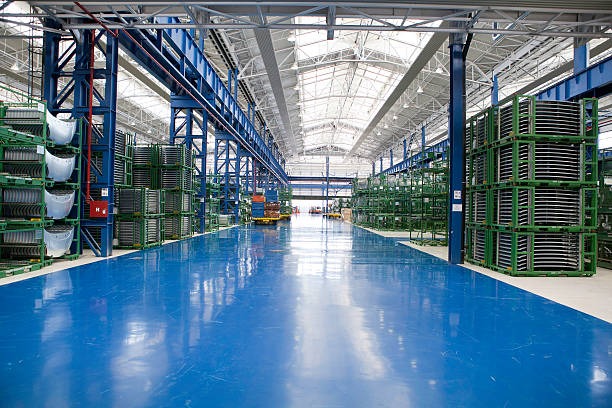
Industrial facilities require flooring systems that can survive years of continuous use. Warehouses, production plants, and logistics centers operate in challenging conditions where floors experience constant pressure from machinery and transportation equipment. Durable flooring solutions help businesses maintain efficiency while minimizing repair expenses.
Modern industrial flooring systems are designed to resist abrasion, impact, and moisture. These surfaces improve operational safety and create stable environments for workers and machinery. Businesses now focus on selecting flooring materials that provide both durability and cost-effectiveness.
The increasing use of automation and heavy equipment has expanded the demand for high traffic flooring industrial systems in commercial and industrial facilities.
Industrial Flooring and Workplace Efficiency
A strong industrial floor improves movement within warehouses and production areas. Smooth flooring surfaces support forklifts and material handling equipment while reducing operational delays. Damaged floors can affect transportation efficiency and increase workplace hazards.
Industrial flooring also contributes to employee safety by reducing slipping risks and supporting stable equipment operation. Many businesses now consider flooring performance an essential part of facility management.
Companies often install high traffic warehouse floor systems because they help maintain workflow consistency and reduce long-term flooring maintenance costs.
Common Industrial Flooring Types
Epoxy flooring is one of the most widely used industrial flooring systems. It creates a hard and seamless surface capable of resisting chemicals, stains, and heavy loads. Warehouses commonly use epoxy coatings because they support intense daily traffic.
Polished concrete remains another popular choice due to its affordability and low maintenance requirements. This flooring system provides long-term durability while improving warehouse brightness through light reflection.
Facilities with demanding operational conditions often prefer high traffic flooring industrial materials such as polyurethane coatings because of their thermal resistance and impact durability.
Benefits of Seamless Flooring
Seamless flooring systems reduce dirt accumulation and simplify maintenance procedures. These surfaces help maintain cleaner industrial environments and reduce contamination risks.
The smooth design also improves transportation efficiency for forklifts and warehouse equipment. Businesses operating in food production or pharmaceutical industries especially benefit from seamless flooring systems.

Resistance Against Heavy Loads
Industrial facilities frequently store large inventories and operate heavy machinery. Flooring systems must tolerate continuous pressure without cracking or surface failure.
Warehouses using high traffic warehouse floor systems gain better load-bearing performance and improved resistance against long-term wear.
Choosing the Right Flooring System
Selecting the correct flooring solution depends on operational requirements and environmental conditions. Businesses should evaluate factors such as traffic volume, chemical exposure, and temperature fluctuations before installation.
Professional contractors analyze facility needs and recommend suitable flooring materials for long-term performance. Proper preparation and installation methods significantly affect floor durability.
Companies investing in high traffic flooring industrial systems often prioritize durability, maintenance efficiency, and workplace safety during the selection process.
Maintaining Industrial Flooring Quality
Industrial floors require routine care to maintain their performance and appearance. Regular cleaning removes debris and chemical residue that may damage the surface over time. Scheduled inspections also help identify cracks or weak areas before they worsen.
Applying protective coatings periodically can improve surface strength and extend flooring lifespan. Facilities should also monitor equipment movement to reduce unnecessary floor stress.
Many warehouse operators prefer high traffic warehouse floor systems because they remain durable under demanding operational conditions while requiring less maintenance.
Future Developments in Industrial Flooring
Advancements in flooring technology continue improving industrial performance standards. Manufacturers are developing stronger coatings with improved resistance against abrasion and chemical exposure. Eco-friendly flooring materials are also becoming more popular among industries seeking sustainable solutions.
Smart flooring technologies with anti-slip properties and enhanced durability are expected to become more common in modern industrial facilities. As warehouse automation grows, stronger flooring systems will remain essential for supporting operational efficiency.
The future of high traffic flooring industrial applications will focus on durability, sustainability, and improved safety for industrial environments.
Conclusion
Industrial flooring is an essential component of warehouse and manufacturing operations. Durable flooring systems improve productivity, support workplace safety, and reduce maintenance costs over time. Businesses that invest in high-quality flooring solutions create more reliable and efficient facilities. Advanced high traffic warehouse floor systems continue to provide dependable performance for industrial spaces handling heavy equipment and constant operational activity.